

Round concrete columns are a common architectural and structural element in modern construction—used in everything from parking garages and bridges to commercial lobbies and high-rise buildings. Their smooth, curved surfaces require specialized formwork that can maintain shape under high concrete pressure while delivering an aesthetically pleasing finish. But what material is most often used for round column forms? The answer depends on project scale, budget, reusability needs, and desired finish—but three primary materials dominate the market: steel, fiberglass (GRP), and plastic (including PP/HDPE systems). Among these, steel remains the most widely used globally for large-scale or high-precision applications, though alternatives are gaining ground in mid-sized and residential projects.
1. Steel: The Industry Standard for Heavy-Duty Use
Steel is historically—and still today—the most common material for round column forms, especially in infrastructure, industrial, and high-rise construction. Typically made from galvanized or painted steel sheets rolled into cylindrical sections, steel column forms offer unmatched rigidity, dimensional accuracy, and load-bearing capacity. They can withstand the high lateral pressure of wet concrete without bulging, even in tall pours exceeding 6 meters.
Key advantages include:
- Reusability of 200–500+ cycles with proper maintenance.
- Excellent surface finish (often “architectural grade”).
- Compatibility with climbing or jump-form systems.
- High resistance to impact and deformation.
However, steel forms are heavy (requiring cranes for handling), prone to rust if not properly treated, and carry a high initial cost ($60–$120 per m² or more). They also demand dry, secure storage between uses. Despite these drawbacks, general contractors and formwork rental companies continue to rely on steel for mission-critical projects where precision and durability are non-negotiable.
2. Plastic (PP/ABS): The Rising Contender for Mid-Scale Projects
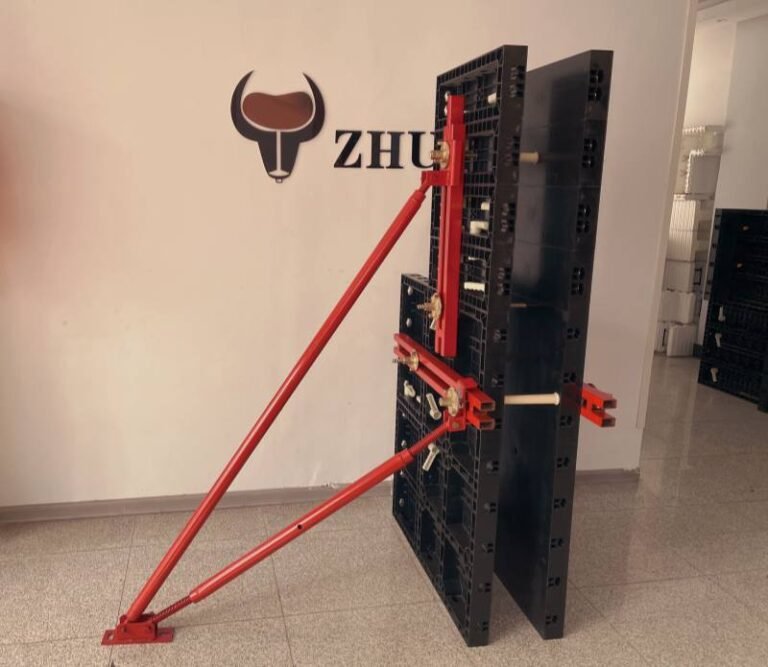
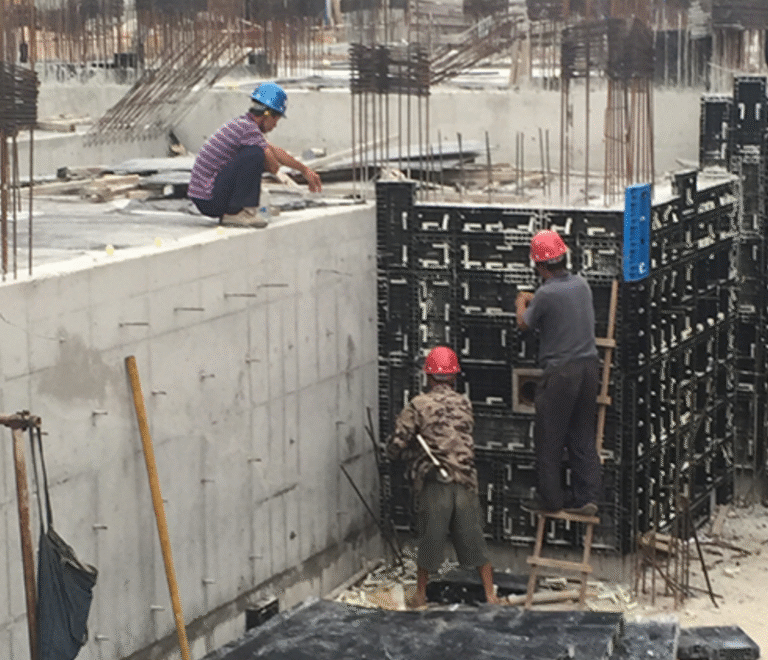
In recent years, modular plastic round column forms—made from polypropylene (PP) or high-density polyethylene (HDPE)—have emerged as a cost-effective alternative for residential, school, and light-commercial builds. These systems use interlocking curved panels that assemble into a full cylinder, often with built-in clamps or straps.
Advantages:
- Very lightweight—no crane needed.
- Low cost ($30–$50/m²) and easy to transport/store.
- Waterproof, rust-proof, and low-maintenance.
- Reusable 80–150 times.
Limitations include lower stiffness (not ideal for columns over 4–5m tall without reinforcement) and fewer diameter options compared to steel or GRP. Still, for contractors managing tight budgets and small crews, plastic offers an attractive balance of performance and practicality.
3. Wood: Rarely Used for True Round Columns
While timber is common for rectangular forms, it’s rarely used for true round columns due to the difficulty of bending plywood to tight radii without cracking. Some builders use segmented wood “polygonal” approximations (e.g., 12-sided columns), but these lack the smooth continuity of molded systems and are labor-intensive.
Conclusion: Steel Leads, But Alternatives Are Growing
So, what material is most often used? Steel remains the dominant choice worldwide, particularly in large, repetitive, or high-specification projects where reliability trumps handling convenience. However, fiberglass dominates in premium architectural applications, and plastic is rapidly gaining share in cost-sensitive, mid-scale construction.
The trend is clear: while steel sets the benchmark, the industry is diversifying. Contractors now select round column form materials based not just on strength, but on total lifecycle cost, labor efficiency, sustainability, and finish requirements. As modular plastic and advanced composite technologies improve, the landscape may shift further—making the “best” material increasingly project-specific rather than universal.
For B2B suppliers and formwork manufacturers, understanding these nuances is key to matching the right solution to the right customer—whether they’re pouring a bridge pier or a boutique hotel lobby.