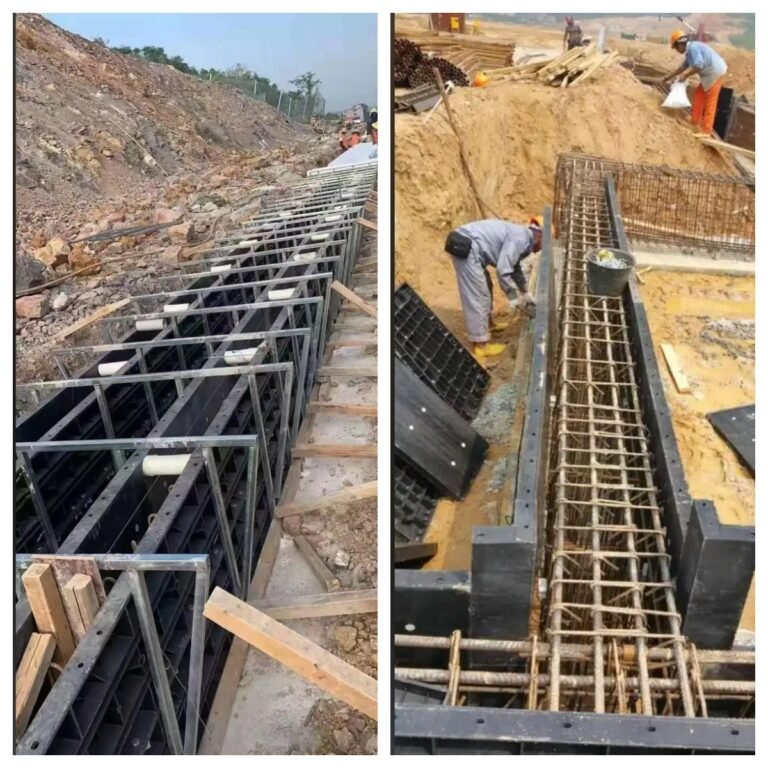

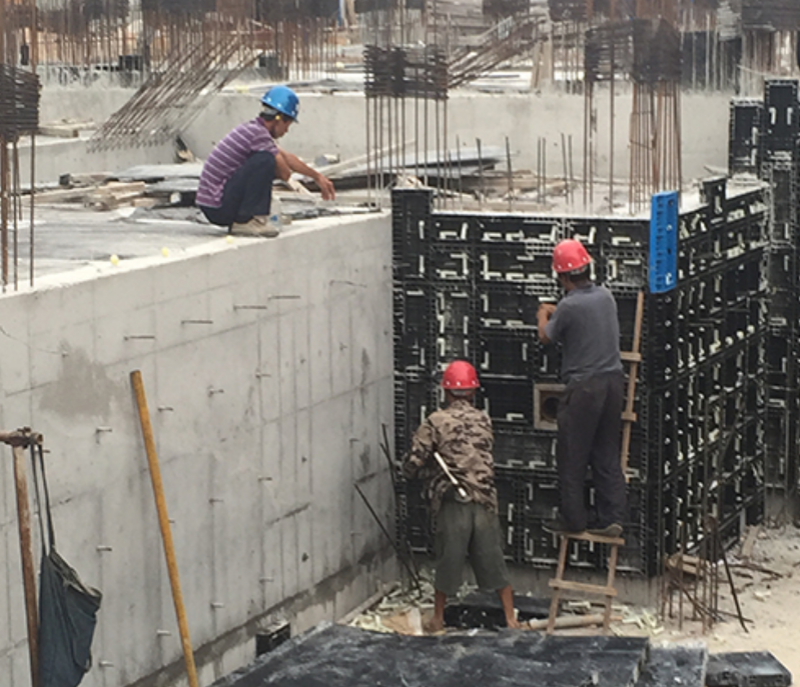
In the modern construction industry, formwork selection directly determines project budgets, construction efficiency and overall cost control. Among various formwork options on the market, plastic formwork has emerged as a cost-effective and practical choice, especially for small and medium-sized construction projects. This article breaks down the full cost structure of plastic formwork, compares it with traditional steel and wooden formwork, and explains why it delivers unbeatable economic value for builders.
Upfront Price & Long-Term Usage Cost of Plastic Formwork
The most intuitive advantage of plastic formwork lies in its balanced upfront investment and ultra-low marginal usage cost. For standard plastic formwork panels, the market price is approximately $35 per square meter, a package price that already includes essential accessories like connecting handles and corner pieces. Unlike many budget formwork products that require separate purchases of connectors and fittings, this all-inclusive pricing eliminates hidden accessory costs and simplifies procurement planning for construction teams.
The real cost savings of plastic formwork shine through its high reusability. With proper maintenance, handling and storage, standard plastic formwork can be recycled for 80 to 100 construction cycles without losing structural stability or concrete forming quality. When we calculate the amortized cost per use, the numbers are highly compelling: dividing the $35 upfront cost by 100 uses gives an average usage cost of only $0.35 per square meter per cycle. This ultra-low per-use cost is nearly unmatchable by traditional formwork materials, making plastic formwork a high-return investment rather than a one-time expense.
Cost Savings Compared with Steel Formwork: Eliminate Heavy Machinery Expenses
Steel formwork has long been favored for its durability, but its high cost of ownership often derails tight project budgets—especially for small and medium-sized projects. Beyond the steep upfront purchase price, steel formwork imposes massive additional costs that many builders overlook initially. Steel panels are extremely heavy, requiring cranes, forklifts and other large construction machinery for transportation, lifting and installation on site. These machinery rentals, fuel costs and operator labor fees add up quickly, significantly inflating the total construction cost.
Plastic formwork solves this problem completely with its lightweight design. The lightweight nature of plastic panels means workers can carry, install and dismantle them manually, with no need for heavy machinery support. This cuts out machinery rental fees, reduces on-site labor intensity, and shortens construction cycles by speeding up formwork handling. For small and medium-sized projects with limited equipment budgets, removing this major expense alone makes plastic formwork a far more economical choice than steel formwork, while still maintaining reliable structural performance for concrete pouring.
Cost & Efficiency Savings vs. Wooden Formwork: Streamline Construction Procedures
Wooden formwork is often seen as a low-cost option, but its hidden costs and inefficiencies make it far more expensive in practice. Traditional wooden molds require additional LVL beams for external reinforcement, adding extra material costs, labor hours and construction steps. Workers must spend a great deal of time fixing wooden beams and reinforcing the formwork structure, which slows down progress and increases labor expenses.
Plastic formwork is engineered for maximum efficiency, with an integrated design that eliminates the need for extra reinforcement. Each panel comes with built-in back ribs and secondary reinforcement structures, providing sufficient strength and stability for concrete pouring. This built-in reinforcement means no external LVL beams are required, simplifying the entire construction process. Builders save on the cost of wooden beams, cut down on labor hours for reinforcement work, and reduce the risk of installation errors. The streamlined workflow not only lowers material and labor costs but also accelerates project completion, creating additional economic benefits for construction teams.
Conclusion: Ideal Cost Solution for Small & Medium-Sized Projects
When evaluating the full cost of formwork—from upfront pricing and per-use amortization to machinery, labor and auxiliary material expenses—plastic formwork stands out as the most cost-effective option. With a $35 per square meter upfront cost, 80-100 recycling cycles and a mere $0.35 average per-use cost, it delivers unbeatable long-term value. It eliminates heavy machinery costs compared to steel formwork and cuts auxiliary material and labor costs compared to wooden formwork, while streamlining construction procedures to boost efficiency.
For small and medium-sized construction projects that prioritize budget control, construction efficiency and cost stability, plastic formwork is undoubtedly the optimal choice. It balances affordability, durability and ease of use, helping builders maximize cost savings without compromising on construction quality.