
Both PP plastic formwork and PP hollow formwork panel are high-performance, reusable polypropylene-based concrete shuttering products, serving as ideal alternatives to conventional plywood, timber and steel formwork in modern construction. Though both feature superior waterproofness, corrosion resistance, recyclability and easy demoulding, they differ significantly in weight, turnover cycles, connection methods, logistics costs and applicable working scenarios due to distinct structural designs and production processes.
PP Plastic Formwork
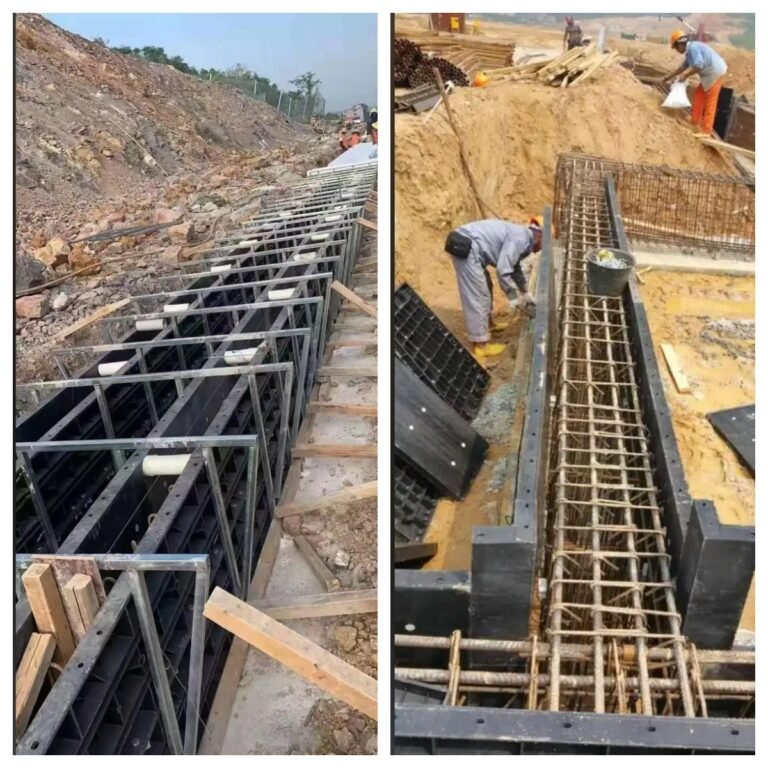
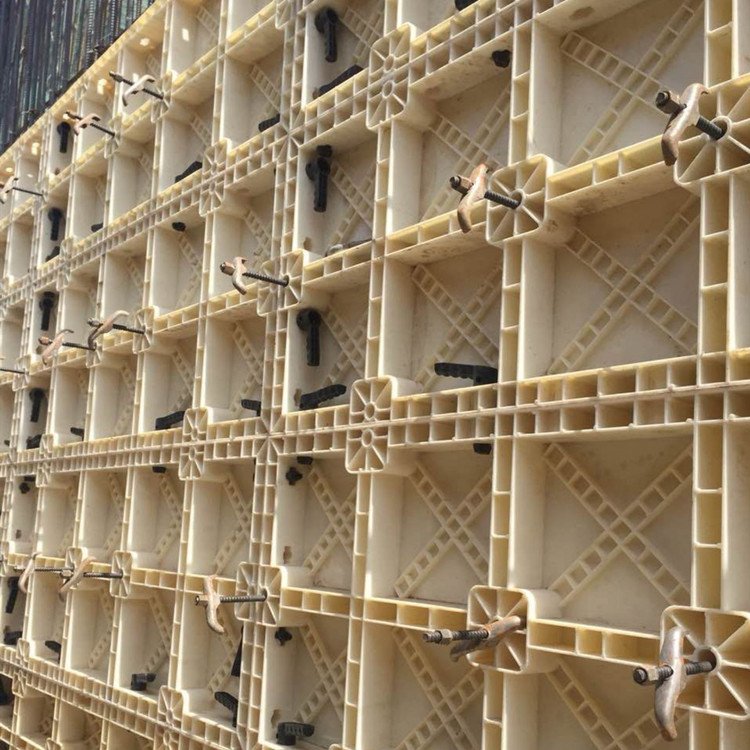
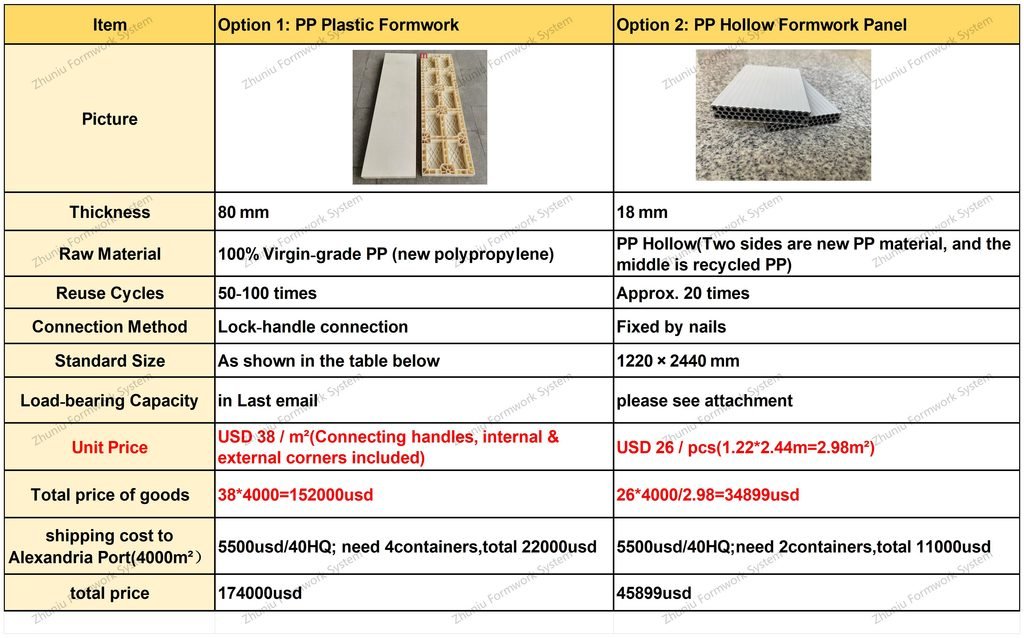
Manufactured from brand-new pure polypropylene raw materials, the PP plastic formwork comes with an integrated back rib structure and a standard overall thickness of 8cm. Its compact and solid monolithic structure endows the panel with exceptional overall rigidity and outstanding impact resistance, delivering stable and reliable performance in concrete pouring operations.
Key Strengths
- Lightweight for heavy-duty performance: The formwork weighs only 13.5kg per square meter, balancing low self-weight and high structural strength.
- Convenient construction: Adopts exclusive handle connection design instead of traditional nailing, enabling fast assembly and disassembly on site, greatly simplifying construction procedures.
- High bearing capacity: Boasts stronger load-bearing performance and excellent pressure resistance against concrete lateral force, ensuring stable pouring quality. reuse time is over 80times.
- Superior demoulding effect: Features a smooth integral surface for effortless demoulding, producing a flat and flawless concrete finish with no extra release agent required in most cases.
Main Drawbacks
- Higher procurement cost: Premium pure raw materials and integrated rib structure lead to a higher unit price and one-time purchase investment.
- Poor on-site flexibility: The integrated solid structure cannot be cut or drilled on construction sites, limiting its adaptability to special and irregular construction scenarios.
Best-Fit Projects
Ideal for heavy-load concrete structures, high-wall pouring projects, and construction works with strict requirements for formwork deflection and bearing capacity, especially suitable for standardized large-scale construction sites pursuing high stability and construction efficiency.
PP Hollow Formwork Panel
PP hollow formwork adopts a double-layer outer plate design with internal hollow cellular structure and reinforcing ribs. The optimized hollow structure reduces material consumption while retaining basic mechanical properties, making it a cost-effective conventional shuttering solution for general construction projects.
Key Strengths
- Cost-effective price: Lower raw material consumption and simpler production process greatly reduce the unit cost and overall project procurement budget.
- Strong on-site adaptability: The hollow panel structure supports arbitrary on-site cutting, sawing and drilling, which can be flexibly customized to fit irregular components and complex construction details.
- Low logistics and storage cost: Lightweight structure reduces single-panel weight, improving container loading efficiency and lowering ocean freight; nested stacking design saves construction yard storage space.
- Durable and recyclable: Resists moisture, chemical erosion and corrosion, with no water absorption, swelling or rotting in humid, coastal and underground environments; it can achieve 30-60 repeated turnover cycles and is 100% recyclable after service life.
Points to Note & Drawbacks
- Traditional connection mode: Relies on conventional nails and bolts for fixation on site, resulting in slower construction speed and lower efficiency compared with handle-connected solid PP formwork.
- Limited bearing capacity: The hollow structure has weaker overall rigidity and pressure resistance, with a higher risk of slight deflection under high concrete lateral pressure.
- Strict support requirements: Auxiliary supporting bracing systems must be reasonably arranged during construction to avoid excessive deformation and ensure pouring safety.
Best-Fit Projects
Perfect for conventional residential buildings, foundation works, beams, columns, floor slabs, municipal projects, trenches and water conservancy structures. It is especially applicable to ordinary construction scenarios with low budget requirements and no ultra-high load-bearing demands.
How to Select Between Them
Opt for PP plastic formwork if your project requires high bearing capacity, high pouring height and strict structural stability, and you prioritize construction efficiency and overall pouring quality despite a higher one-time procurement cost.
Choose PP hollow formwork panel for conventional residential, municipal and foundation projects with limited budget. It is the optimal choice for projects pursuing low comprehensive cost, flexible on-site processing and low logistics expenditure, on the premise of arranging standard supporting systems.
Both formwork types outperform traditional wooden and plywood formwork in reusability, corrosion resistance and concrete finishing effect. The final selection shall be determined by combining project load conditions, construction requirements, budget planning and on-site operation conditions.
Leave your message, and Zhuniu Formwork Company will matching concrete formworks suitable for you and best discount !!